Twelve of the world's sharpest cheeses, ranked from approachable to extra-pungent — with intensity scores, pairing notes, and shopping links.
"Sharp" describes cheese that's been aged long enough to develop concentrated, complex flavor — typically six months at minimum, often two years or more. As cheese ages, moisture drops, texture firms or crumbles, and enzymes break down fats and proteins into the sharp, almost beefy notes that define the category. But "sharp" isn't a single thing: a 9-month Cheddar bites differently than a 5-year Pecorino Romano, and a Parmigiano aged 24 months sits in a different place on the palate than a 2-year Aged Gouda. Below, twelve aged cheeses ranked by typical intensity — with the caveat that age and producer can shift any of them up or down a notch.
Shop All Sharp Cheeses →
How to Read the Intensity Scale
●●○○○ Approachable sharp — pleasant bite, family-friendly, melts well
●●●○○ Notably sharp — distinct tang, flavor lingers, ideal for cheese boards
●●●●○ Extra sharp — intense, often crumbly, needs strong pairings
●●●●● Extra-extra sharp / pungent — maximum concentration, salty crystals, grating territory
The 12 Sharpest Cheeses, Ranked
1. Aged Provolone (Provolone Piccante)
●●○○○
The starting point on the sharp-cheese spectrum. Provolone Piccante — meaning "spicy" or "sharp" Provolone — is aged 6 to 12 months, longer than the milder Dolce version. From the pasta filata (stretched curd) family, it has a tangy, slightly piquant bite that works equally well on a sandwich, in antipasto, or melted.
Pairs well with: cured salami, olives, crusty bread, medium-bodied reds.
Shop Aged Provolone →
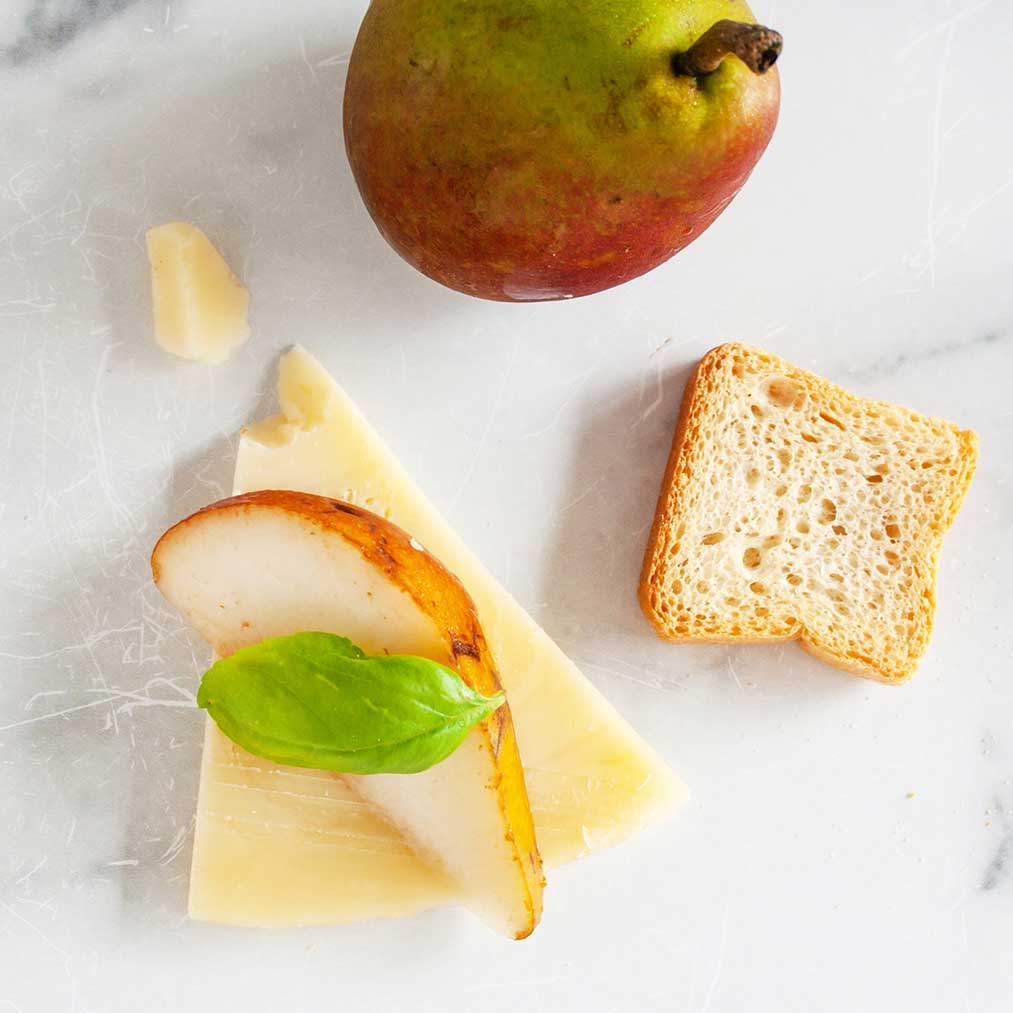 Aged Provolone Piccante — the entry point on the sharp cheese spectrum.
2. Sharp Cheddar (9–12 months)
●●○○○
Classic sharp Cheddar — aged just long enough to develop tang and structure but still smooth and sliceable. Originating in Somerset, England, Cheddar is a firmly pressed cheese that begins life acidic and buttery before age concentrates it into something fuller and more complex. The 9–12 month tier is the sweet spot for everyday eating.
Pairs well with: apples, grapes, hard cider, grainy mustard.
Shop Sharp Cheddar →
3. Aged Manchego (12 months)
●●●○○
Spain's most famous cheese, made from raw Manchega sheep's milk in La Mancha. At 12 months, the texture turns firm and slightly crumbly, and the flavor moves from grassy and sweet to nutty and pleasantly sharp with a long finish. The signature herringbone-patterned rind is a reliable visual cue for authenticity.
Pairs well with: Marcona almonds, quince paste (membrillo), Tempranillo, dry sherry.
Shop Aged Manchego →
4. Aged Gruyère
●●●○○
Switzerland's most-exported cheese, named for the town of Gruyères. Younger Gruyère is mild and creamy; aged versions (10–18 months and beyond) develop a deep, earthy sharpness with notes of toasted nuts and brown butter. Famous for melting beautifully into fondues, gratins, and French onion soup.
Pairs well with: apples, pears, walnuts, dry whites, cured ham.
Shop Aged Gruyère →
5. Grana Padano
●●●○○
Italy's other great hard grating cheese — produced across the Po Valley and aged 9 months minimum, often longer. Grana Padano is firm, dry, and fruity, with the same protein-crystal crunch as Parmigiano Reggiano but a slightly milder, more approachable flavor. Excellent grated, but also worth eating chunked with a drizzle of olive oil.
Pairs well with: aged balsamic, walnuts, prosciutto, sparkling wines.
Shop Grana Padano →
6. Aged Gouda (2+ years)
●●●●○
Young Gouda is mild and supple; at two years and beyond, it transforms into something else entirely. The texture turns dense and slightly grainy, the color deepens to caramel, and the flavor takes on notes of butterscotch, browned butter, and salted toffee with a sharp, nutty bite. One of the most surprising cheeses for first-time tasters of aged styles.
Pairs well with: dark beers, aged whiskey, dried fruits, dark chocolate.
Shop Aged Gouda →
7. Extra Sharp Cheddar (1–2 years)
●●●●○
Where Cheddar earns the "extra" label. At 12–24 months, the texture starts to crumble, the flavor concentrates into something fuller and more direct, and a long finish sets in on the palate. American producers like Cabot make superb extra sharp Cheddars; Quebec and Vermont vintage versions take it further still.
Pairs well with: hard cider, IPA, apple pie, grainy mustards.
Shop Extra Sharp Cheddar →
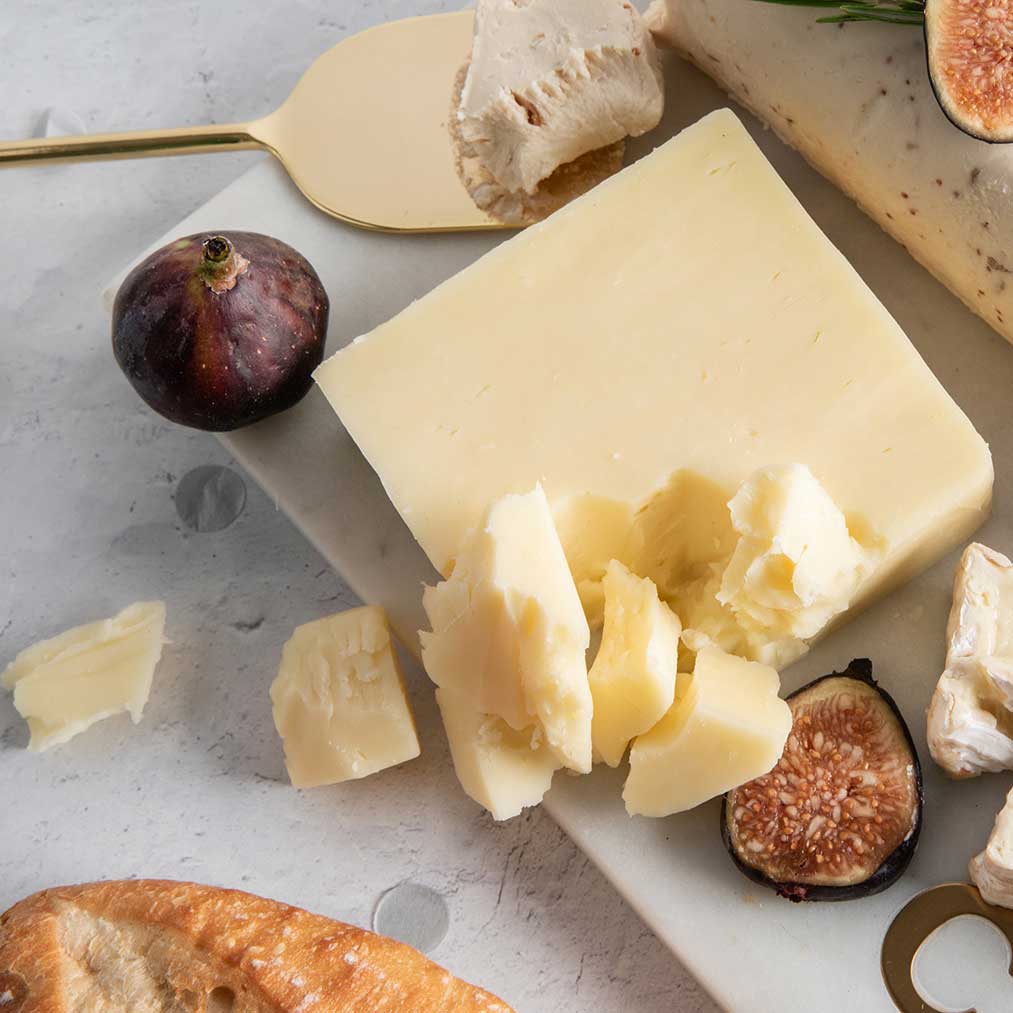 Extra Sharp Cheddar at 12 to 24 months — the texture begins to crumble and the tang sharpens.
8. Parmigiano Reggiano (24 months)
●●●●○
The "King of Cheeses." Made only in a small region of Northern Italy under strict DOP rules, Parmigiano Reggiano at 24 months has a dry, granular texture studded with tyrosine crystals — those white specks that crunch between your teeth. The flavor is sharp, savory, slightly fruity, with a long umami finish that defines what most people imagine when they hear "aged hard cheese."
Pairs well with: aged balsamic, prosciutto, ripe pears, full-bodied reds.
Shop Parmigiano Reggiano →
9. Pecorino Toscano (aged)
●●●●○
Sheep's milk cheese from Tuscany, made under DOP rules. Young Pecorino Toscano is soft and approachable; aged versions (4 months and up) firm up and develop a sharp, salty, slightly sweet flavor with grassy and nutty notes from the local pasture. A natural pair with Tuscan reds and Italian cured meats.
Pairs well with: Finocchiona salami, fresh figs, honey, Chianti.
Shop Pecorino Toscano →
10. Pecorino Romano
●●●●●
The sharpest of the Pecorinos and one of the most assertive cheeses in Italian cooking. Made from sheep's milk in Lazio, Sardinia, and Tuscany, Pecorino Romano is salt-cured aggressively and aged 8 months minimum. The result is intensely salty, sharp, and savory — primarily a grating cheese for pasta dishes like cacio e pepe and amatriciana, but powerful in small amounts as a table cheese too.
Pairs well with: bold reds (Sangiovese, Aglianico), fresh fava beans, drizzled honey.
Shop Pecorino Romano →
11. Vintage / Vault Cheddar (3+ years)
●●●●●
The end of the Cheddar spectrum. Aged three years or longer — sometimes five, occasionally ten — these are crumbly, intensely sharp Cheddars with concentrated tang, complex finish, and visible salt-and-protein crystals. Quebec Vintage Cheddar (sometimes labeled "Vault" or "Reserve") and Widmer's 10-Year are benchmark examples. Not for the faint of heart, but transcendent for anyone who's developed a taste for sharp.
Pairs well with: port, vintage scotch, dark fruit preserves, dense whole-grain bread.
Shop Vintage Cheddar →
12. Mimolette (Extra Aged)
●●●●●
The wildcard of the list. A bright orange, spherical French cheese from the Lille region — historically created as France's answer to Dutch Edam. At 18 to 24 months, Mimolette becomes rock-hard, deeply nutty, intensely sharp, and unmistakably distinctive. Famously aged with the help of cheese mites, which give the rind its lunar-crater texture. Once you've tried a properly aged Mimolette, no other cheese tastes quite like it.
Pairs well with: dark ales, aged port, walnuts, dried apricots.
Shop Mimolette →
How Sharp Is "Sharp"? Understanding Cheese Age Labels
There's no USDA rule governing the words "Sharp," "Extra Sharp," or "Vintage" on a cheese label, but the industry follows reasonably consistent conventions:
Sharp: typically aged 6 to 12 months. Pleasant bite, still smooth in texture, family-friendly.
Extra Sharp: typically aged 12 to 24 months. Crumbly, concentrated, distinct tang. The flavor lingers.
Vintage / Reserve / Vault: typically aged 2+ years, sometimes much longer. Crystalline texture, intensely sharp, complex finish.
The same labels mean roughly the same thing across hard grating cheeses too: a 24-month Parmigiano Reggiano sits in the "extra sharp" tier; a 36-month wheel pushes into "vintage" territory. Producer matters as much as age — two Cheddars aged the same length can taste noticeably different depending on milk, starter culture, salt, and humidity during aging.
How to Build a Sharp-Cheese Board
A great sharp-cheese board mixes intensities so each cheese has somewhere to go. A reliable formula:
Pick three cheeses across the intensity range. One ●● (Sharp Cheddar or Aged Provolone), one ●●● (Aged Manchego or Grana Padano), and one ●●●●● (Pecorino Romano or Vintage Cheddar). The mild-to-extreme arc gives tasters somewhere to start and somewhere to push.
Add contrast. Sharp cheese gets monotonous on its own. Pair with sweet (honey, fig jam, dried apricots), crunchy (Marcona almonds, walnuts), and bright (apple slices, pickled onions, cornichons).
Match drinks to the boldest cheese on the board. If Pecorino Romano or Vintage Cheddar is on it, you need a bold red, port, or aged whiskey. If the strongest is a Sharp Cheddar, hard cider or a medium red works fine.
A Note on Aging
Aged cheeses are easier on the digestive system than fresher ones. As cheese matures, bacteria produce enzymes that break down lactose along with proteins and fats — meaning the lactose content drops considerably with age. Most extra-sharp cheeses are well-tolerated even by people who avoid fresh dairy. The same enzyme breakdown produces the rich, sometimes beefy, sharp flavors and the crystalline texture characteristic of long-aged cheese.
Storage matters. Sharp cheeses are more stable than younger ones, but exposure to too much air dries them out, and sealing them too tightly traps moisture and dulls the flavor. Wax paper or specialized cheese paper is ideal; cheese storage bags are a worthwhile upgrade if you eat sharp cheese regularly.
Shop All Sharp Cheeses at iGourmet →