The four real Italian Pecorinos — Romano, Toscano, Sardo, and Siciliano — compared by region, milk, age, and use, with shopping links to authentic DOP wheels.
"Pecorino" simply means "made from sheep's milk" (pecora = sheep). The name covers an enormous range of cheeses, but only four hold DOP — Italy's protected designation of origin status: Pecorino Romano, Pecorino Toscano, Pecorino Sardo, and Pecorino Siciliano. Each is tied to a specific region, made under strict rules about milk source, aging, and production. Below: a comparison of the four DOPs, plus the regional pecorinos worth knowing, plus a frank note on what's sold as "pecorino" in American grocery stores (and what you might want instead).
Shop All Pecorino →
The Four DOP Pecorinos at a Glance
Pecorino Romano — Lazio, Sardinia, Tuscany. Aged 8+ months. Hard, salty, intense. Primarily a grating cheese for pasta.
Pecorino Toscano — Tuscany. Aged 4–6 months. Semi-firm, mild, sweet, grassy. A table cheese for boards and antipasti.
Pecorino Sardo — Sardinia. Aged 2–12 months. Two styles (dolce and maturo). Sweet to sharp, depending on age.
Pecorino Siciliano — Sicily. Aged 4+ months. Firm, peppery, often studded with peppercorns. Distinctive and regional.
The Four DOP Pecorinos
Pecorino Romano
The most famous Pecorino, and the one most people picture when they hear the name. Despite the "Romano" in the name, the bulk of production happens on Sardinia, with smaller amounts in Lazio (the region surrounding Rome) and southern Tuscany. Salt-cured aggressively and aged eight months minimum, Pecorino Romano is intensely salty, sharp, and concentrated — primarily a grating cheese for Roman pasta classics like cacio e pepe, carbonara, and amatriciana. As a table cheese it's powerful in small amounts: a thin shaving with a drizzle of honey or aged balsamic is a classic Italian aperitivo move.
Best for: grating over pasta, finishing risottos, paired with bold reds.
Shop Pecorino Romano →
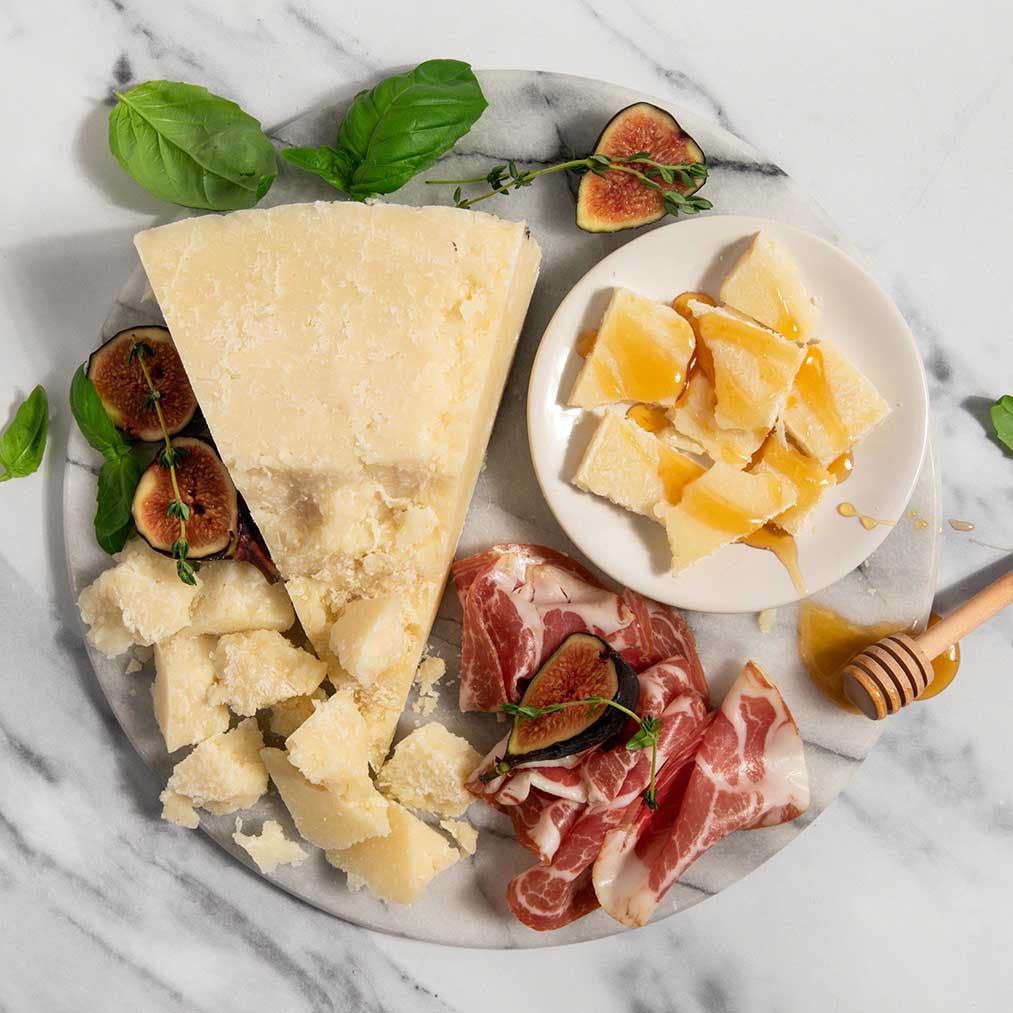 Authentic Pecorino Romano DOP — aged eight months minimum, intensely salty and sharp.
Pecorino Toscano
The most approachable of the four DOPs. Made in Tuscany under DOP rules since 1996, Pecorino Toscano is aged a much shorter time than Romano — four to six months for the firm version, and as little as 20 days for the soft fresh version. The flavor is sweet, mild, slightly grassy, with the kind of nuttiness that comes from sheep grazing on Tuscan hillside pasture. Unlike Romano, this is a true table cheese: meant to be eaten in slices, not grated.
Best for: cheese boards, antipasti with cured meats, a glass of Chianti.
Shop Pecorino Toscano →
Pecorino Sardo
Made on Sardinia from the milk of the Sarda sheep breed. Comes in two distinct styles: Dolce (aged 20–60 days) is soft and sweet, almost like a young cheddar; Maturo (aged 2–12 months) firms up and develops a sharper, more concentrated flavor that begins to approach Romano territory. Pecorino Sardo is the canonical pecorino of Sardinia — predating Pecorino Romano on the island by centuries — and is increasingly popular outside Italy as a more nuanced alternative to Romano.
Best for: Dolce as a table cheese with fresh fruit; Maturo for cooking or aged-cheese boards.
Shop Pecorino Sardo →
Pecorino Siciliano
The least exported of the four DOPs and the most distinctive. Made in Sicily from raw sheep's milk, often studded with whole black peppercorns (a version called Pepato). Aged a minimum of four months, Pecorino Siciliano is firm, sharp, and peppery, with a flavor profile that reflects the wild herbs and grasses of Sicilian pasture. Worth seeking out if you want something genuinely different from the more commonly available Romanos and Toscanos.
Best for: Sicilian cheese boards, alongside cured tuna or mortadella, with bold southern Italian reds.
Shop Pecorino Siciliano →
Regional Pecorinos Worth Knowing
Beyond the four DOPs, dozens of regional pecorinos are made across Italy. They lack DOP status — meaning the name and method aren't legally protected — but several are excellent and increasingly available outside Italy.
Pecorino Calabrese
Made in Calabria, the toe of Italy. Typically firmer and saltier than a Toscano but milder than a Romano. Often aged in wax or wrapped in chestnut leaves, which lend a subtle herbal character. A regional table cheese that pairs beautifully with Calabrian salumi and southern Italian honey.
Best for: southern Italian cheese boards, paired with 'Nduja or soppressata.
Shop Pecorino Calabrese →
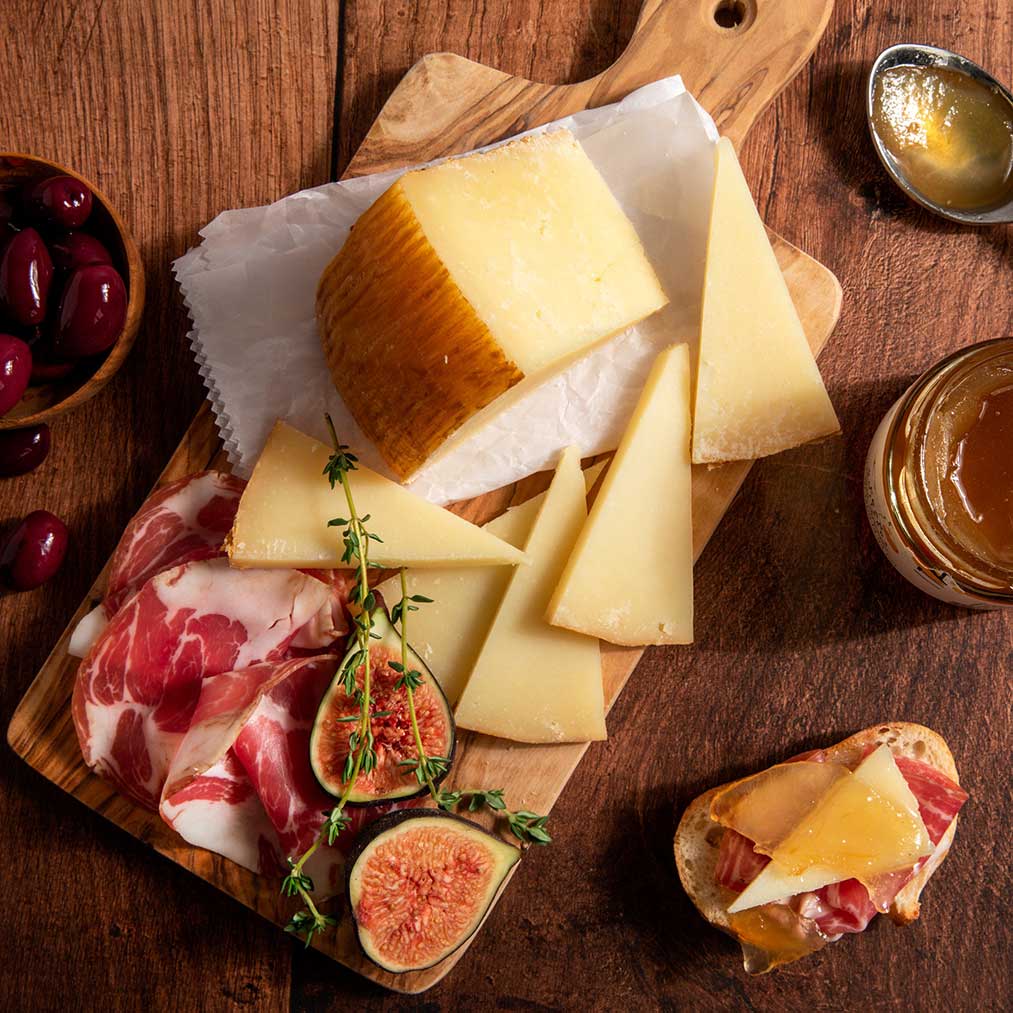 Pecorino Calabrese — a regional table cheese from southern Italy, firmer than Toscano but milder than Romano.
Pecorino di Pienza
From the small Tuscan town of Pienza, often considered the spiritual home of artisan pecorino. Not DOP itself, but produced under tight regional tradition. Younger versions are buttery and grassy; aged versions develop wonderful complexity, sometimes wrapped in walnut leaves or aged in oak barrels.
Pecorino with Truffle, Pepper, or Herbs
Italian pecorino-makers (especially in Tuscany and Sardinia) frequently flavor their wheels with black truffles, black peppercorns, chili flakes, fennel, or saffron. These aren't traditional DOP cheeses, but they're widely produced and often delicious — particularly the truffled versions, which take an already nutty cheese into deeply earthy territory.
"Pecorino" at the Grocery Store: What to Watch For
Much of what's sold as "pecorino" or "pecorino romano" in American supermarkets isn't Italian. Domestic producers in the US (and producers in other countries) can use the name "pecorino romano" because the term hasn't been fully protected in the United States the way "Parmigiano Reggiano" has. The result: shelf-stable, factory-produced sheep's milk cheese sold under the same name as the authentic Italian original, but with a noticeably different flavor — usually milder, softer, and less complex.
How to spot real Italian Pecorino Romano:
- Look for the "DOP" label on the wheel or packaging. Real Pecorino Romano DOP carries this designation by law.
- Check the country of origin — it should say Italy, with a specific regional designation (Lazio, Sardinia, or Grosseto in Tuscany).
- Look at the rind. Authentic Pecorino Romano DOP has a hard, often dark rind with the cheese name and producer marks stenciled on it.
- Trust your nose. Real Romano has a sharp, pungent, almost barnyard quality. Domestic versions tend to smell mild and milky.
Domestic pecorinos aren't bad cheeses — many are perfectly serviceable for cooking. But if you're paying for "Pecorino Romano" and getting the experience of true DOP wheels, the difference is significant, and worth knowing.
How to Use Pecorino in Cooking
Pecorino — especially Pecorino Romano — is a foundational cheese in Italian cooking, particularly in Roman cuisine. A few classic uses:
Cacio e Pepe. The simplest and most demanding pasta dish in Roman cooking — pasta, pecorino romano, black pepper, and pasta water. The cheese is the dish. Use a real DOP wheel; domestic pecorino doesn't emulsify the same way.
Carbonara. Pecorino Romano (sometimes blended with Parmigiano Reggiano) is the cheese in classic Roman carbonara. The salt and sharpness balance the richness of the egg and guanciale.
Amatriciana. Tomato, guanciale, pecorino. The cheese cuts through the fat of the cured pork and the acidity of the tomato.
Salads and Vegetables. Shaved Pecorino Toscano or Pecorino Sardo Dolce works beautifully on arugula salads, roasted vegetables, or alongside fresh figs and prosciutto.
Cheese Boards. Pecorino Toscano and Pecorino Sardo Dolce are far better choices than Romano for a board — sliceable, balanced, not overpoweringly salty. Pair with Tuscan or Sardinian cured meats, fresh fruit, and a medium-bodied red.
What Is Pecorino, Exactly?
Pecorino is the Italian word for sheep's milk cheese — derived from pecora, meaning sheep. Cheeses made from sheep's milk have been produced in Italy for thousands of years; Pecorino Romano in particular was a staple of the Roman legions, who carried it on their campaigns because it traveled well and provided concentrated nutrition. Today, only four pecorinos hold DOP status (Romano, Toscano, Sardo, Siciliano), but the name applies to any Italian sheep's milk cheese.
Sheep's milk has roughly twice the fat and protein of cow's milk, which is why pecorinos tend to be richer, denser, and more concentrated in flavor than equivalent cow's milk cheeses. The aging process — bacteria producing enzymes that break down fats and proteins over time — produces the sharp, sometimes piquant flavors characteristic of well-aged pecorino.
Shop All Pecorino at iGourmet →